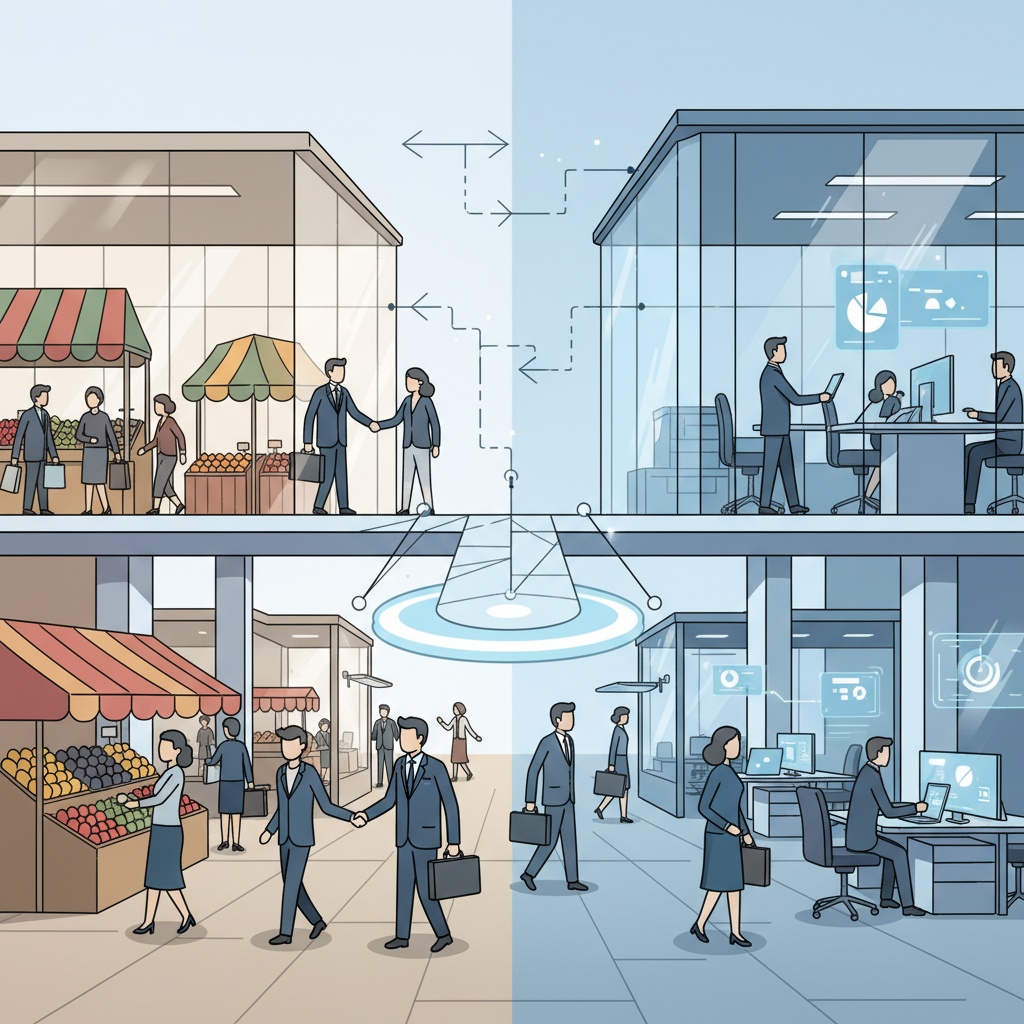
Secondhand and circular economy marketplaces approaching $350B by 2028
Secondhand and Circular Economy Marketplaces Approaching $350B by 2028
Reading time: 12 minutes
Ever wondered why your neighbor’s garage sale just went global? The secondhand economy isn’t just thriving—it’s revolutionizing how we think about consumption, sustainability, and value creation. Let’s explore why this $350 billion opportunity is reshaping commerce as we know it.
Table of Contents
- Understanding the Circular Economy Revolution
- What’s Driving the Explosive Growth?
- Platform Strategies That Win
- Revenue Models and Monetization Tactics
- Navigating Operational Challenges
- Your Market Entry Blueprint
- Frequently Asked Questions
Understanding the Circular Economy Revolution
Well, here’s the straight talk: The secondhand marketplace isn’t about dusty thrift stores anymore. We’re witnessing a fundamental shift in consumer psychology where “pre-owned” has transformed from stigma to status symbol.
The circular economy represents a systemic approach to economic development designed to benefit businesses, society, and the environment. Unlike the traditional linear economy (make, use, dispose), circular models prioritize keeping products and materials in use for as long as possible.
The Numbers Don’t Lie: Market Trajectory
According to GlobalData’s comprehensive analysis, the global secondhand market is projected to reach $350 billion by 2028, growing at a compound annual growth rate (CAGR) of 11-13%. To put this in perspective:
Market Size Comparison: 2023 vs 2028 Projections
Percentages represent market penetration of secondhand versus new goods in each category
Real-World Success: The Vinted Phenomenon
Consider Vinted, the Lithuanian fashion marketplace that started in 2008. By 2023, they’d reached 75 million members across 15 markets, with users uploading 20 items per second. Their zero-commission model for sellers (buyers pay protection fees) disrupted traditional consignment approaches and created unprecedented viral growth.
Quick Scenario: Imagine you’re a 28-year-old professional with a closet full of barely-worn clothes. Five years ago, you might have donated them or let them gather dust. Today? You list them on Vinted during your lunch break, make $300 by the weekend, and feel good about reducing waste. That’s the psychological shift driving this market.
What’s Driving the Explosive Growth?
The Generational Wealth Transfer
Millennials and Gen Z consumers aren’t just participants—they’re the engine of this transformation. Research from ThredUp’s 2023 Resale Report reveals that 40% of Gen Z’s wardrobes contain secondhand items, compared to just 18% for Baby Boomers.
Key behavioral shifts include:
- Value-consciousness without sacrifice: 62% of younger consumers view buying secondhand as a way to access premium brands affordably
- Environmental identity: 73% consider sustainability when making purchase decisions
- Social currency: Thrift flips and resale hauls generate millions of views on TikTok, turning secondhand shopping into entertainment
- Economic pragmatism: Rising inflation and living costs make resale markets attractive for both buyers and sellers
Technology as the Great Enabler
Modern resale platforms leverage sophisticated technology stacks that previous generations couldn’t imagine:
AI-powered authentication reduces fraud in luxury goods markets. Platforms like Vestiaire Collective use computer vision to verify product authenticity with 95%+ accuracy, addressing the primary concern that once limited high-end resale.
Dynamic pricing algorithms optimize seller success and buyer satisfaction simultaneously. eBay’s suggested pricing feature, powered by billions of historical transactions, helps sellers price competitively while maintaining margins.
Logistics innovation removes friction from peer-to-peer transactions. Companies like Trove and ThredUp offer white-label resale infrastructure that major brands (Levi’s, Patagonia, Lululemon) use to integrate circularity into their business models.
The Regulatory Tailwind
Policy changes are accelerating market growth. The EU’s Circular Economy Action Plan mandates “right to repair” legislation, extended producer responsibility, and targets for reusable packaging. France now requires large fashion retailers to offer repair services. These regulations don’t just encourage circular models—they’re making linear consumption more expensive.
Platform Strategies That Win
The Four Dominant Business Archetypes
| Platform Type | Examples | Core Advantage | Growth Rate | Primary Revenue |
|---|---|---|---|---|
| Peer-to-Peer Marketplaces | Vinted, Poshmark, Depop | Viral growth, community engagement | 18-25% CAGR | Transaction fees, buyer protection |
| Managed Marketplaces | ThredUp, Vestiaire Collective | Quality control, trust, convenience | 15-20% CAGR | Commission (30-40%) |
| Direct Buy/Resell | Back Market, Recommerce | Speed, predictable pricing | 12-17% CAGR | Margin on inventory |
| Brand-Integrated | Patagonia Worn Wear, Lululemon Like New | Brand loyalty, authenticated products | 22-30% CAGR | Store credit loops, reduced cannibalization |
| Category Specialists | StockX (sneakers), Reverb (instruments) | Deep expertise, authenticity | 20-28% CAGR | Transaction fees, authentication services |
Case Study: Back Market’s Refurbished Electronics Empire
Back Market, the French refurbished electronics marketplace founded in 2014, demonstrates how strategic positioning creates defensible competitive advantages. Rather than building inventory, they created a quality certification program for refurbishers, ensuring 30-day guarantees and standardized grading systems.
Their breakthrough? Reframing the narrative. Instead of “used electronics,” they marketed “professionally refurbished with warranty at 40% savings.” By 2023, they’d reached $1 billion in annual revenue with 6 million customers across 16 countries.
Pro Tip: The most successful circular marketplaces don’t compete on price alone—they create trust mechanisms that make buying pre-owned feel safer than buying new from unknown sellers.
Revenue Models and Monetization Tactics
Beyond Simple Commission Structures
The evolution from basic transaction fees to sophisticated revenue architectures separates sustainable platforms from those struggling to reach profitability. Here’s how leading players monetize:
Multi-tiered Commission Models: Rather than flat percentages, platforms like Vestiaire Collective adjust commissions based on item value (15-25% sliding scale), seller status (power sellers get discounts), and category margins.
Seller Services Monetization: Poshmark generates significant revenue from promoted listings ($7.99-$15.99 per item), allowing sellers to boost visibility. ThredUp offers “White Glove Service” ($50-$150) where professional photographers handle listing creation.
Buyer Protection Fees: Vinted’s model charges buyers 5% + $0.70 protection fees while keeping sellers fee-free, creating psychological advantages for supply acquisition while maintaining revenue.
B2B Infrastructure Services: Trove licenses its resale platform to brands for $500K-$2M annually plus transaction percentages, creating high-margin enterprise revenue streams.
The Unit Economics Challenge
Let’s be honest: Many resale platforms struggle with profitability. The average managed marketplace spends $15-$25 on customer acquisition, while average order values hover around $50-$70. That means platforms need 2-3 repeat purchases before breaking even on a customer.
Winning strategies focus on:
- Increasing lifetime value through cross-category expansion (fashion sellers adding home goods)
- Reducing processing costs via automation (AI-powered quality checks, automated pricing)
- Creating lock-in effects through store credit systems that keep value circulating within the platform
Navigating Operational Challenges
Challenge #1: The Quality Control Dilemma
How do you scale quality assurance when your inventory comes from millions of individual sellers? This is the central operational challenge that determines platform success or failure.
The problem: P2P platforms see 15-20% of transactions resulting in disputes over item condition. Managed marketplaces can reject 30-50% of submitted items as unsuitable for resale, creating seller frustration.
Practical solutions:
- Graduated seller ratings: Implement reputation systems where trusted sellers gain faster payout times and lower fees. Mercari saw dispute rates drop 40% after introducing “Reliable Seller” badges earned through 50+ successful transactions
- Photo quality requirements: Mandate minimum photo standards with AI rejection of blurry/insufficient images before listing goes live
- Standardized condition taxonomies: Create objective grading criteria (like Grailed’s 5-point system) rather than subjective descriptions
- Spot-check auditing: Randomly authenticate 5-10% of high-value transactions to maintain platform integrity while controlling costs
Challenge #2: Reverse Logistics at Scale
Returns in circular marketplaces create unique headaches. Unlike traditional e-commerce where items return to a centralized warehouse, P2P returns must route back to individual sellers, often crossing international borders.
The impact: Return rates in secondhand fashion average 20-25%, compared to 18% for new fashion. Processing costs for returns often exceed the item value for sub-$30 products.
Innovative approaches:
Vinted’s bold solution was eliminating returns for fit issues entirely—all sales are final unless the item is not as described. This reduced return rates to under 8% while creating incentive for accurate listings.
ThredUp uses machine learning to predict return likelihood based on hundreds of variables (item type, seller history, buyer return history, price point). High-risk transactions trigger additional verification steps pre-shipment.
Challenge #3: Cross-Border Complexity
The most valuable circular economy opportunities are global, but international expansion introduces regulatory complexity. Different countries have varying rules around:
- VAT treatment of used goods (some EU countries exempt, others don’t)
- Import duties on secondhand items
- Consumer protection regulations
- Data privacy requirements (GDPR, CCPA, etc.)
- Payment processing restrictions
Ready to transform complexity into competitive advantage? Focus on one region initially, master the regulatory environment, then expand systematically rather than attempting global launch.
Your Market Entry Blueprint
So you’re considering entering this $350 billion opportunity? Here’s your strategic roadmap that balances ambition with pragmatism:
Phase 1: Category Selection & Positioning (Months 1-3)
Choose your battlefield wisely. The biggest mistake new entrants make is competing directly with established generalists. Instead:
- Identify underserved niches: Baby gear, outdoor equipment, musical instruments, and hobby-specific items show strong resale demand but limited specialized platforms
- Analyze unit economics first: Calculate realistic take rates, shipping costs, and customer acquisition costs before building anything
- Determine your archetype: Will you be peer-to-peer (lower overhead, higher scale required) or managed marketplace (higher trust, more operational intensity)?
- Define your differentiation: What makes buyers and sellers choose you over Facebook Marketplace or eBay?
Phase 2: MVP Development & Community Building (Months 4-8)
Don’t build the perfect platform—build the minimum viable marketplace:
- Core features only: Listing creation, search, messaging, payments, ratings. That’s it for version 1.0
- Seed supply before launch: Manually recruit 50-100 sellers with quality inventory before opening to buyers
- Leverage existing infrastructure: Use Stripe Connect for payments, Shippo for shipping, Twilio for messaging rather than building custom
- Create community rituals: Weekly challenges, seller spotlights, or themed collections that build engagement beyond transactions
Phase 3: Growth Loop Activation (Months 9-18)
The most successful marketplaces engineer viral growth loops:
The buyer-to-seller conversion: Depop converts 35% of buyers into sellers within 6 months. How? Post-purchase emails offering selling credit, making listing creation dead simple from purchase confirmation screens, and social proof showing “people like you earned $X this month.”
Social sharing incentives: Give both parties $10 credit for referred users who complete transactions. This costs you nothing until value is created.
Content-driven discovery: Partner with micro-influencers in your niche who create “thrift flip” or “collection tour” content featuring your platform. Reverb’s partnership with gear review YouTubers drove 40% of early growth.
Critical Success Metrics to Track
Forget vanity metrics. These KPIs actually predict marketplace health:
- Liquidity ratio: Time-to-sale for new listings (target: under 14 days for 60%+ of inventory)
- Take rate: Revenue as percentage of GMV (aim for 15-25% depending on model)
- Repeat transaction rate: Percentage of users completing 3+ transactions within first year (target: >40%)
- Seller retention: Active sellers after 6 months (healthy marketplaces retain 50%+)
- CAC payback period: Months to recover customer acquisition cost (should be under 12 months)
The Broader Implications
The circular economy isn’t just a business trend—it’s a necessary transition. With resource scarcity increasing and climate pressures mounting, businesses that facilitate reuse, repair, and resale will become infrastructure for sustainable consumption.
As someone exploring this space, you’re not just building a marketplace. You’re creating mechanisms that decouple economic growth from resource extraction. That’s not hyperbole—it’s the pragmatic reality that forward-thinking investors and customers increasingly recognize.
Your next move matters. Will you sit on the sidelines watching this $350 billion opportunity develop, or will you carve out your niche in the circular economy? The barriers to entry have never been lower, but the window for category leadership is closing as established players expand.
What underserved community or product category could you serve better than anyone else? That’s where your circular economy journey begins.
Frequently Asked Questions
How do circular marketplaces compete with free platforms like Facebook Marketplace or Craigslist?
Successful paid platforms compete on trust, convenience, and community rather than just price. They offer secure payments that eliminate meeting strangers with cash, shipping integration that removes coordination hassles, quality standards that reduce buyer risk, and specialized audiences that increase sale speed. Facebook Marketplace has massive reach but terrible conversion rates—specialized platforms achieve 8-12x higher sale velocities because buyers are pre-qualified and motivated. Think of it this way: You could theoretically sell your car via handwritten signs on telephone poles, but you use CarMax because the convenience premium is worth it.
What are the most significant regulatory risks facing circular economy platforms?
The three primary regulatory concerns are: (1) Extended Producer Responsibility (EPR) laws that may eventually apply to resale platforms, requiring contribution to recycling programs; (2) Consumer protection regulations that blur lines between private sellers and commercial entities as platforms grow, potentially requiring warranty obligations; and (3) Tax compliance as governments recognize revenue flowing through platforms—several countries now require marketplaces to report seller earnings above thresholds and collect VAT on cross-border transactions. The smart approach is building compliance infrastructure early rather than retrofitting later. Work with legal counsel experienced in marketplace models to implement proper seller agreements, tax reporting, and consumer protection policies from day one.
Can circular marketplaces achieve profitability or are they dependent on continuous funding?
The profitability picture is nuanced. P2P marketplaces like Vinted achieved profitability in 2020 after 12 years because their asset-light model scales efficiently once network effects kick in. Managed marketplaces face longer paths to profitability due to inventory handling and quality control costs—ThredUp turned its first profitable quarter in 2023 after 15 years. Category specialists like StockX reached profitability faster (within 5-7 years) through higher margins on authentication services and passionate niche communities. The key differentiator is achieving sufficient scale where marginal costs decline dramatically. Platforms processing 100K+ monthly transactions typically achieve unit economics that support profitability, while those below this threshold often require continued funding or acquisition exits.